
01 · More doors
More programs, more chances
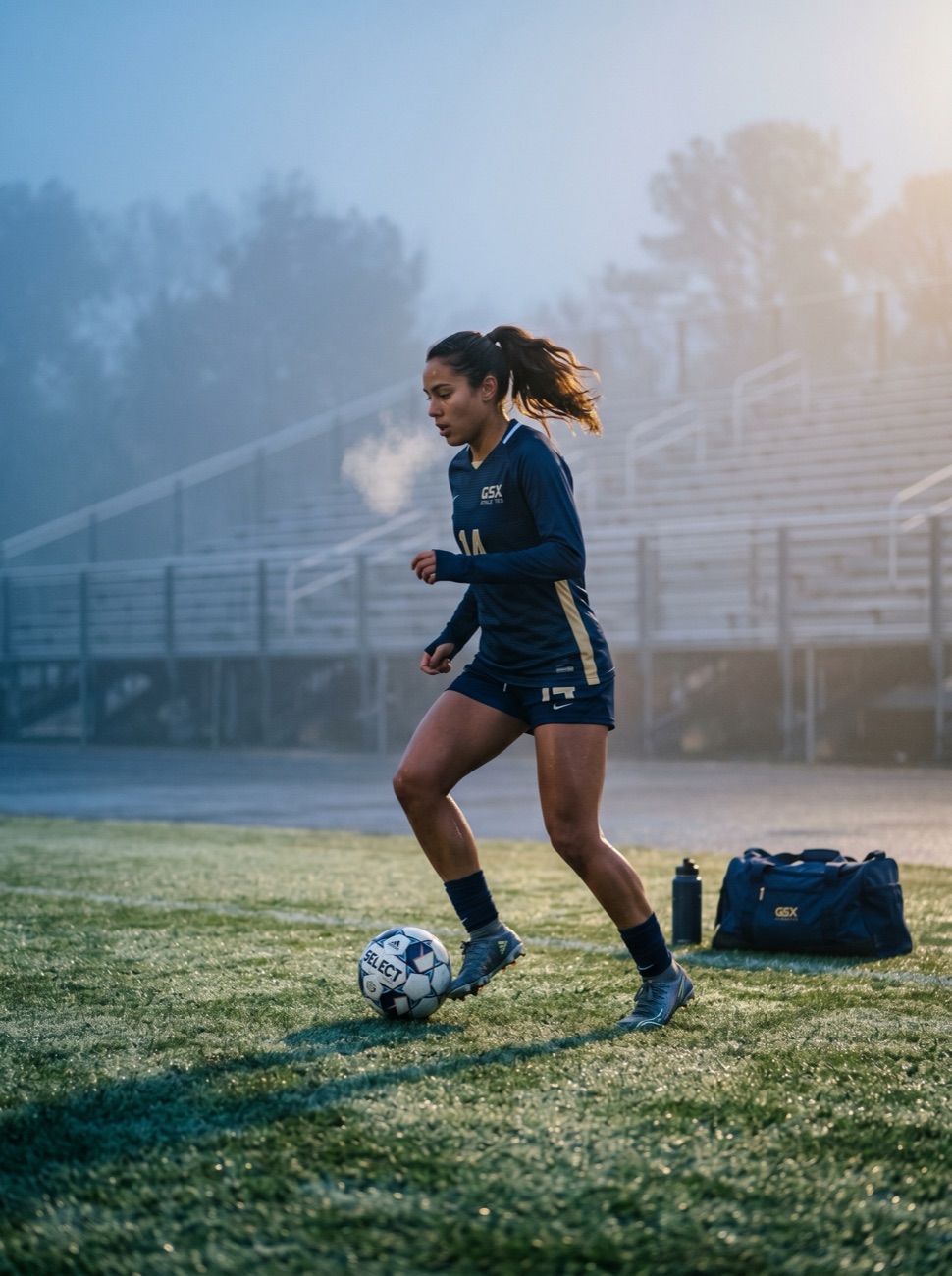
Women's soccer is one of the sports with the most college programs in the US. More programs means more coaches looking for a specific position, a specific profile or a player who can start next season.
Pick a level
NCAA D1
350 teams · men's: 213
Schools in the House settlement: roster of up to 28, the school decides how many get aid. Before 2025 the cap was 14.
NCAA D2
259 teams
Up to 9.9 scholarships, usually split into partial awards.
NCAA D3
Hundreds of programs
No athletic scholarships; academic and need-based aid only.
NAIA
Its own association
Up to 12, split as the coach decides.
JUCO
Two-year colleges
Its own rules by division; a common way to start and then transfer.
02 · Dates
When coaches can contact you
After sophomore year
Division I women's coaches can start calling, texting and emailing you, and conversations about offers can begin.
Before junior year
Official visits to campus can start.
You can write to coaches any time. Most international players who get offers wrote first. Plan yours year by year in our recruiting timeline.
03 · What coaches want
What coaches look for
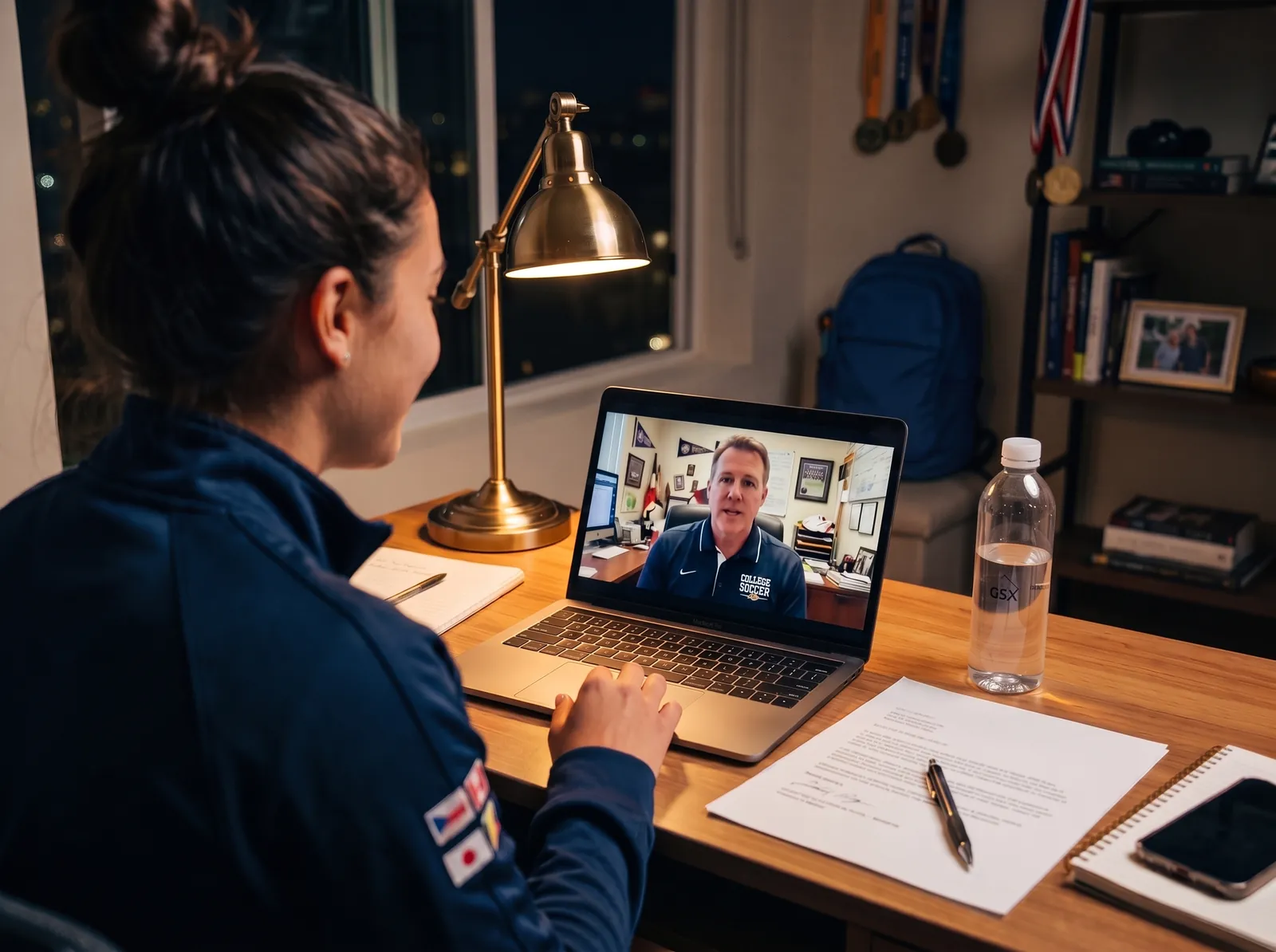
A full match, not only highlights
Coaches want to see how you play without the ball, how you recover and how you decide.
Clips that fit your position
A center-back shows duels, passing out from the back and organization. A forward shows movement, finishing and pressing.
Your level of competition, explained
Name your league and what it means in your country. Coaches abroad do not know every league.
Grades and English
A strong academic record opens academic aid that can be added to athletic aid.
Where your level might fit. As a rough guide from what we see: a women's first division, a pro academy or a national youth team usually means Division I conversations. A strong regional or national youth league often fits Division II, the NAIA or a JUCO that leads to a transfer. The honest answer comes after someone watches you play.
04 · Academics
Academics and English
To play NCAA Division I or II you register with the NCAA Eligibility Center, which reviews your school record from your own country. Most universities also ask for an English test: Duolingo, TOEFL or IELTS. Our English test guide explains which one to take.
05 · Families
Five questions to ask every program
Sending a daughter abroad at 18 is a big decision. Ask every program the same questions and tick them off.
In the US, Title IX requires schools to offer women equal opportunities in sport.
06 · Questions
Quick answers
Are there really more scholarships for women than for men?
There are more women's programs, and before 2025 the Division I women's cap was 14 scholarships against 9.9 for men. Today, at Division I schools in the House settlement, both have rosters of up to 28 and each school decides how much aid to give.
Can I play in the US if I only play for my school team?
Sometimes, especially through a JUCO, the NAIA or Division III. The more organized competition you can show on video, the more options you will have.
Are the contact dates the same as for men?
Yes. In NCAA Division I, women's and men's soccer follow the same dates: June 15 after sophomore year and August 1 before junior year.
Does it matter if a woman coach evaluates me?
What matters is an honest evaluation from people who know US college soccer from the inside and have watched you play.